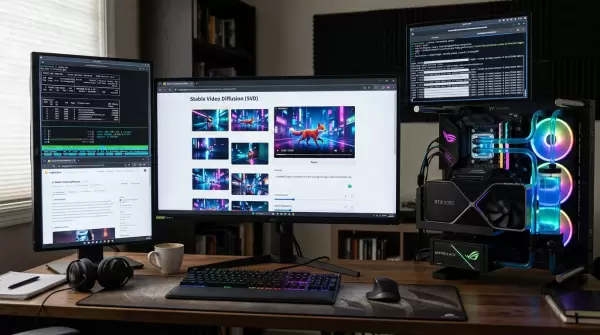
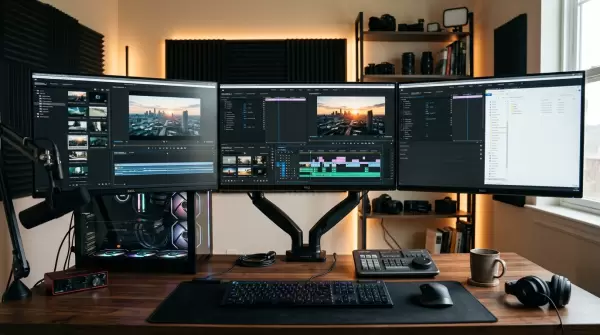
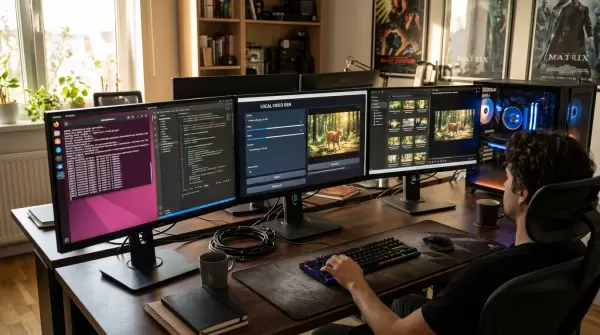
Forty Videos for a Trailer Manufacturer: What Changes When a Job Gets This Big
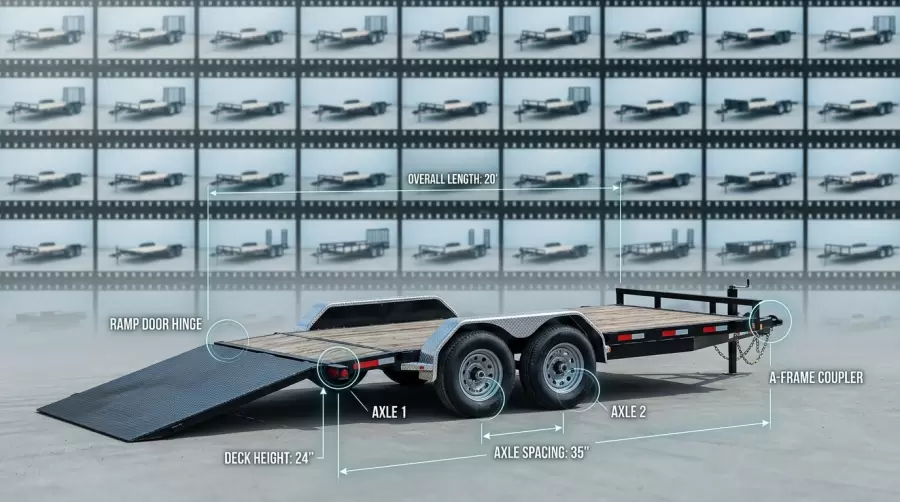
The order was forty videos. One manufacturer, one product line, a dealer network spread across a dozen states, and a catalogue of trailers that all look similar to everyone except the people who buy them.
We had done eight video projects before. Forty is not eight, five times over. At that size the difficulty stops being generation and becomes consistency: forty videos that look like they came from one company, forty products that match their own spec sheets, and a schedule where nobody waits six weeks to see anything.
Here is how it ran.
Forty was not the number he arrived with
He came to us wanting a video for every model in the catalogue, roughly the same video each time with a different trailer in it. That instinct is right and the execution would have been wasteful. Forty near-identical films would have blurred into one, and his dealers would have used two of them.
The first conversation was about where these were going. His website has a page per model, and those pages needed something short and factual that answers what a buyer wants to know before calling a dealer. His social feeds needed something else entirely, vertical, fast, no voiceover, because people watch them with the sound off in a parking lot. And his sales team kept getting the same handful of questions about features, which is a different video again, one that has nothing to do with any single model.
So the forty became a structure. Twelve horizontal model films for the product pages. Twenty vertical cuts for social and for dealers to post themselves. Eight feature explainers covering the things buyers ask about across the whole range. Same budget, three jobs instead of one, and each piece with a place to live.
What he sent us
Photographs, mostly from a phone. His yard with finished units lined up, the shop floor mid-build, his welders and assemblers in company shirts, close-ups of couplers, fenders, ramp doors and lighting. He also sent the spec sheets, which turned out to matter more than the photos.
One model was not built yet. It exists as CAD, coming off the line in spring, and he wanted it in the launch batch. For that one we worked from his engineering renders instead of photographs, which is possible and slower, and worth knowing if you ever want video before a product physically exists.
The free test, and the six things wrong with it
Before quoting the full job we made a test at no cost: stills of one model, then a short animated clip. It looked good. It was also wrong in six specific ways, and his product manager listed all of them in one email.
The coupler was the wrong type for that trailer. The fender line curved where his does not. The tail lights sat in the wrong position and there were two where there should have been four. The ramp door hinged at the wrong edge. The tyres were passenger tyres, not trailer tyres, which is apparently the first thing a buyer notices and the last thing a stranger thinks about.
This is the part of industrial work that catches studios out. A generative model will produce a convincing trailer all day long. It will not produce your trailer, because it has never seen one and it is averaging every trailer on the internet. Six wrong details in a fifteen second clip is not a rendering problem, it is a credibility problem: the dealer sees it, the buyer sees it, and the video stops selling and starts raising questions.
We fixed the six, regenerated, sent a second pass, and that one he approved. Only then did we scope the full forty and quote it.
Building the rules before building the videos
On a small job you can hold everything in your head. On forty you cannot, so we spent the first week of the project making a reference set rather than making videos.
That meant approved angles for each model, an approved paint and finish, the exact placement and proportion of his decals, and four environments the whole line would live in: his yard, a highway, a job site, and a farm road. Every later shot was generated against that set. It sounds bureaucratic and it is the reason a viewer can watch three of these videos in a row on his website and read them as one company rather than three suppliers.
Logos and model names were kept out of generation entirely. Text is what these models are worst at, and a slightly wrong logo is worse than no logo. His decals went on in post, as graphics, correct every time.
Script, storyboard, sign-off
We wrote one script structure for the model films and adapted it per trailer, rather than writing twelve unrelated scripts. The verticals got their own treatment, since a vertical is not a crop of a horizontal and a shot planned for a wide frame loses its subject the moment you cut the sides off it.
The storyboards went over with generated sample frames pasted in, so he was approving shots instead of sentences. He changed things. A payload sequence moved earlier because dealers said buyers care about capacity before they care about looks. One environment got cut because his customers do not tow on mountain roads and it looked like somebody else's brochure.
Making forty videos without a six-week silence
We produced in waves of eight. Each wave went out for review while the next was in generation, which kept feedback arriving in usable pieces instead of one enormous batch at the end, and it meant a correction in wave one never repeated itself thirty times.
Images came from Nano Banana, Grok and ChatGPT depending on the shot, with prompts written using Claude to hold a model, an environment and a light direction steady across hundreds of separate generations. Video ran on Google Veo including the Omni model, with some shots animating a single approved frame and others blending several references into a scene that did not exist in any of them. Loading sequences were the hardest, because a mower going up a ramp has to look like weight moving, and weight is exactly what a model gets wrong when nobody is watching.
Wave three cost us a day. A ramp door opened the wrong way in four verticals, we had missed it, and his product manager caught it again. Regenerated, re-cut, back out the same week. Nobody was pleased, and it was cheaper than it would have been on a shoot.
Assembly
All forty were cut in Adobe Premiere Pro. Music was generated and timed to the edit, voiceover the same, and the model films got a spec overlay so a buyer sees the number while hearing the sentence. The verticals were built with no voiceover at all, text on screen only, because that is how they get watched.
Dealers got their versions with clean space at the end for their own name and phone number, which he asked for late and which turned out to be the feature they used most.
Delivery, notes, and the second delivery
He had notes on eleven of the forty. Some were edits, a few were single moments regenerated, one model film was rebuilt almost entirely because the trailer read as too small next to the truck in front of it and looked like the wrong product.
Second delivery, approved in full. Total time from the approved test piece to the final forty was around six weeks, with the first wave usable in his hands after ten days.
What it cost him in time, and in paperwork
Two conversations at the start, an afternoon of photography in his own yard, his product manager reading five review batches, and one late request about dealer versions. No shoot days, no location, no crew moving between four environments, no trailers hauled anywhere for a camera, no production paused.
On the commercial side, we invoiced officially and issued the document set his accounts department needed from a foreign supplier. It went on his books as marketing spend like any other vendor invoice. What that means for a specific company's tax position is a question for its own accountant, not for us, but the paperwork was not the part anyone had to worry about.
What we would tell the next manufacturer
If you make something physical and technical, the risk in this kind of work is not that the video looks bad. It will look good. The risk is that it looks good and wrong, and the people you are selling to are precisely the people who will spot it.
So send the spec sheets along with the photographs. Have your product manager read every review batch, because a marketing lead will happily approve a trailer that a dealer would laugh at. And ask for a test piece before you commit to anything, because six wrong details found in one clip cost nothing, and the same six found across forty finished videos cost the project.
If you have a product line sitting on a website with nothing but stills next to it, send us a few photographs and tell us what you sell. We will make you a test piece first.