How to produce 20 medical equipment videos without a film crew or clinic downtime: 5 days from brief to delivery
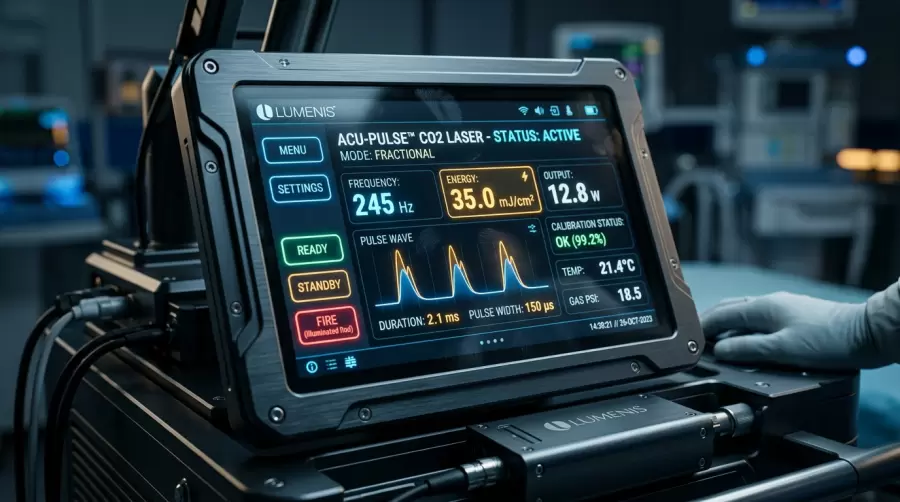
A private multi-specialty clinic recently updated its medical hardware. The fleet included twenty high-end systems: MRI scanners, ultrasound workstations, surgical carbon-dioxide lasers, and RF-lifting handpieces. The marketing director reached out to us with a clear task: produce twenty clean product videos (15 to 20 seconds each) for their website and digital screens in the clinic lobby. Each clip needed to highlight machine build quality and operator ergonomics.
The standard industry response to this brief is booking a full camera crew. But when production teams look at the reality of an active medical facility, standard filming logistics break down immediately.
The operational bottleneck: why filming inside an active clinic gets expensive fast
The primary cost driver on a shoot like this is room downtime. An MRI suite or a specialized laser room generates substantial revenue each day. Rigging cinema lights and dialing in clean takes takes at least three hours per machine. Multiplying that by twenty machines means closing treatment rooms for sixty hours across two weeks. That creates an unacceptable disruption to patient appointments.
Sterility creates another serious obstacle. Surgical suites and laser treatment rooms require controlled clean environments. A production crew of six to eight people brings heavy stands, rolling carts, and loose cables across sterile floors. A stray dust particle on a high-precision optical fiber can damage a component worth thousands of dollars. After every shoot, the facility must shut down the room for deep sanitation and UV sterilization.
Physical camera optics present technical headaches as well. Medical hardware combines polished chrome, matte plastics, and reflective touchscreens. Under standard room lighting, polished chrome catches unwanted yellow reflections from overhead bulbs. Even worse, the refresh rate of medical monitor screens rarely syncs with a standard 1/50 or 1/60 camera shutter speed. Displays flicker or display dark diagonal scan lines on camera, forcing camera operators to spend hours tweaking shutter angles for every individual screen.
Finally, live filming leaves zero margin for error. If the chief physician notices a week later that an ultrasound probe had the wrong clinical guide attached during the shoot, fixing the mistake requires reassembling the entire crew and closing the room a second time.
The pilot test: removing generative artifacts before production starts
When we discussed using a generative video pipeline, the client had understandable concerns. Their marketing team had previously experimented with off-the-shelf generative tools. They had seen the common defects: rubbery plastics and warped hardware controls. In medicine, doctors spot inaccurate hardware instantly.
To eliminate risk before signing, we produced a finished pilot video of their most complex unit at no cost.
The client chose their fractional carbon-dioxide laser. It includes an articulated optical arm, a chrome handpiece, and a sensitive touchscreen. The clinic marketing manager walked up to the unit between patient appointments and took five clear smartphone photos: the overall machine, the handpiece, and the settings display. No tripod, no studio lighting, just standard ambient light.
We delivered the completed 15-second pilot within four hours. We set the lighting to a clean 5600K daylight balance and dialed in the matte plastic texture. Interface graphics remained razor-sharp. When the clinic director and lead surgeon saw the result, the geometric stability was clear. The chassis held its geometry, and chrome reflections moved naturally without jitter. The contract for all twenty videos was signed that afternoon.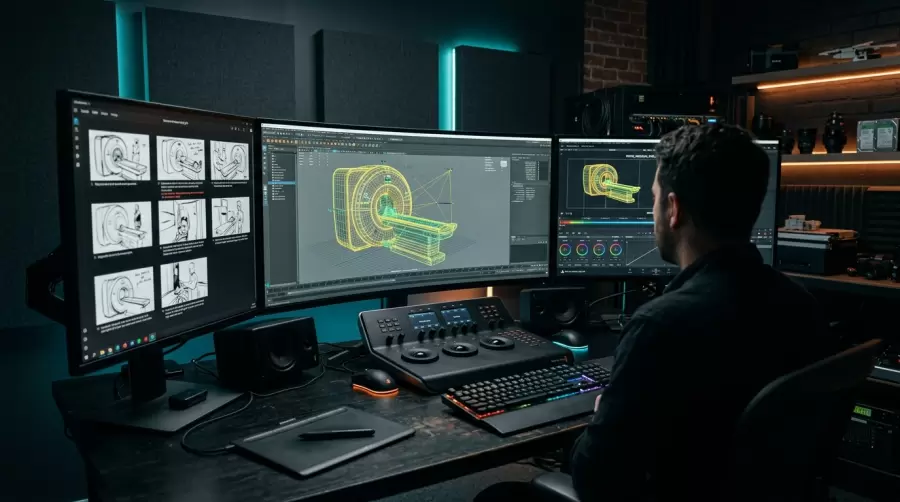
The static storyboard stage: locking geometry before motion
A frequent mistake in generative video production is running video models directly from raw reference photos or text prompts. That approach produces random mutations, distorting panel seams and warping control dials the moment the camera moves.
We separated the production into two distinct stages: static geometry approval, followed by motion synthesis.
Using the client smartphone photos, we first built a gallery of high-resolution master stills. For each of the twenty machines, we established four standard framing angles:
- A wide frontal view of the system positioned in a clean clinic interior.
- A forty-five degree perspective highlighting overall dimensions and machine layout.
- A macro close-up of the treatment applicator or transducer head.
- A straight-on framing of the touchscreen displaying realistic clinical operating parameters.
We assembled these stills into a digital contact sheet and sent it to the clinic medical team for review. This review saved days of potential re-renders. The physicians flagged subtle operational details that a creative agency would otherwise miss. On an acoustic wave therapy unit, the applicator hose needed to rest inside a specific molded guide. On an ultrasound scanner, the screen needed to display an active Doppler vascular scan, matching a live exam.
Adjusting static frames in 2D took minutes. We adjusted component positions and corrected interface readouts in 2D. We moved to motion generation only after the clinic signed off on every still.
Dynamic camera motion in Omni Flash: maintaining physical consistency
With all static geometry locked, we initiated motion generation in Omni Flash.
This tool provides consistent temporal stability across frames. Adjacent frames maintain identical lighting values and component alignment. The machine housing remains solid metal throughout the shot, maintaining rigid geometry as the camera orbits.
We designed a restrained camera choreography for the entire series. We built every shot around two classic studio camera moves.
First, we used slow push-in moves along the optical axis. The virtual camera glides forward steadily along the lens axis. The shot conveys solid weight and clean industrial assembly. Second, we used smooth orbital arcs. The camera arcs forty-five degrees around the console, easing gently to rest on the working handpiece.
By calibrating generation parameters carefully, we prevented edge deformation. Screen readouts stayed crisp throughout the move, while vents held straight lines. Lens covers generated natural optical flares.
Assembly in Premiere Pro: editorial pacing and tactile audio design
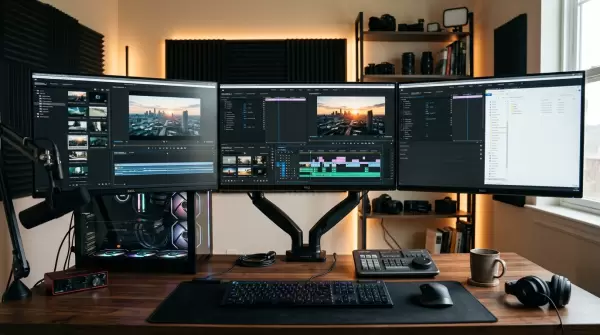
Raw generative shots are only visual plates. Real commercial pacing and weight are built on the edit timeline in Adobe Premiere Pro.
We established a strict editorial structure for every asset. Each video runs between fifteen and twenty seconds, which fits digital ad placements and social media feeds cleanly. We cut each video into four distinct beats:
- Three seconds: wide establishing shot of the unit inside the treatment room.
- Four seconds: medium angle presenting the main chassis and operator layout.
- Four seconds: macro detail focusing on the treatment tip or applicator.
- Four seconds: concluding framing resting on the machine badge and clinic branding.
Color correction took place in Rec.709 space. We removed yellow casts from ambient room lighting, standardizing every clip to a clean 5600K daylight temperature. Metal surfaces received a cool titanium grade, balanced by neutral white panels. Across all twenty units, the series looks like a unified fleet captured in a single studio session.
Sound design completed the tactile feel of the hardware. Visuals look credible when audio confirms physical weight. We constructed a three-layer audio track for each machine.
First, we recorded mechanical tactile foley: tactile latch clicks and smooth joint movements. Second, we added functional operational sounds: the quiet hiss of liquid cooling lines and the low hum of internal power supplies. Third, we laid down clean room tone representing medical ventilation systems. We cut stock music completely. Authentic machine sounds carry the edit, creating a focused clinical feel.
Delivery in 5 days and zero-friction revisions
On day five of the production schedule, we delivered twenty finished master packages in 4K ProRes for large clinic displays and H.264 files optimized for the web.
The client executive team approved seventeen videos on first review without changes. On three machines, the clinic physicians requested minor technical adjustments. One aesthetic laser needed an updated microneedling cartridge tip, and a physical therapy monitor required a steeper pulse-wave graph.
In a conventional live-action workflow, these requests typically mean schedule delays and change-order fees for re-shoots. In our workflow, revisions took three hours.
We updated the static 2D references, regenerated the four-second shots in Omni Flash and dropped them back into the Premiere timeline. We delivered all three updated masters that same afternoon at no additional cost. Fine-tuning technical details with clinical staff is standard production service. We do not bill extra for minor adjustments.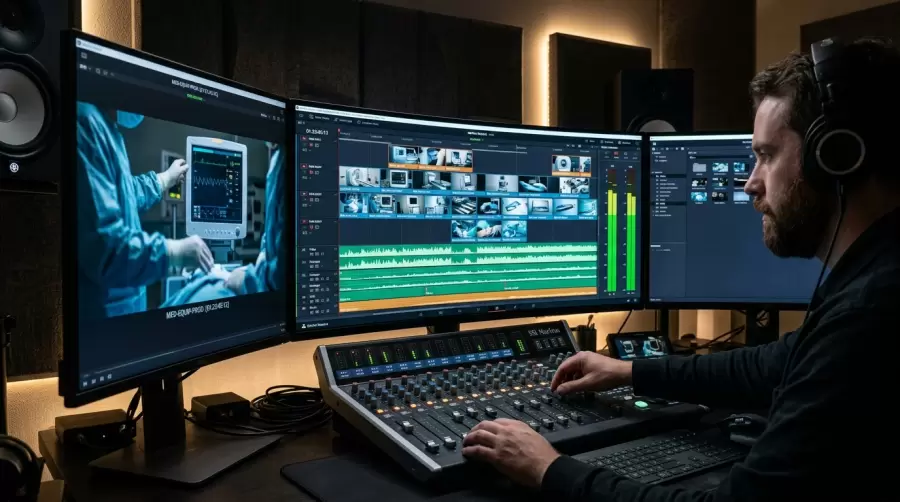
The final numbers and production takeaways
This project illustrates a practical alternative to disruptive on-site commercial filming for specialized equipment.
A traditional production model would have required three to four shooting days, shutting down twenty procedure rooms, losing substantial appointment revenue, and risking re-shoots over minor clinical details.
Our two-stage visual workflow delivered twenty broadcast-quality assets without interrupting hospital operations:
- Zero hours of clinic downtime or canceled patient appointments.
- Five smartphone photos per machine as the sole source material.
- Five business days from initial brief to final master delivery.
- Three hours to implement specialist medical revisions without budget increases.
The practical lesson for marketing leaders in medical and high-tech sectors is straightforward. Generative video quality depends on structured workflow separation. When physical geometry is locked in a static review stage and generative tools manage camera motion alone, production runs reliably and delivers predictable commercial results.